

Italy is one of the top study destinations for American students, and in the 2023-2024 academic year it ranked as the single most popular country for US students studying abroad, ahead of the UK and Spain. But a semester abroad is different from earning a full degree.
If you’re planning a bachelor’s, master’s, or PhD program in Italy, or you want an American degree to count for work or further study once you’re there, you’ll run into a requirement that catches most Americans off guard: the Dichiarazione di Valore, or Declaration of Value.
What Americans Need to Know

American degrees have no automatic legal standing in Italy. To use a US degree for university enrollment, professional licensing, or many employment situations, you generally need a Dichiarazione di Valore (DOV), issued by the Italian Consulate with jurisdiction over the school that granted your degree.
The DOV confirms what your degree represents in the US system so an Italian institution or authority can evaluate it against Italian equivalents. Getting one requires an apostilled and officially translated copy of your diploma and transcripts, submitted to the correct consulate for your region.
Why This Step Exists

Italy doesn’t recognize foreign academic credentials automatically. A US bachelor’s or master’s degree, on its own, carries no legal weight with an Italian university, ministry, or licensing board.
The Declaration of Value fills that gap. It’s a document, written in Italian, that describes what your degree is, what it took to earn it, and how it fits into the education system that issued it. It doesn’t grant equivalency by itself. It’s the input that lets an Italian authority, usually a university’s Segreteria Studenti or the Ministry of Education, make that equivalency determination.
You’ll typically need a DOV for:
- Enrolling in an Italian university, especially for a master’s degree or PhD
- Using a foreign degree in dealings with Italian public administration
- Practicing a regulated profession in Italy
The Blue Card work permit no longer requires a DOV under current rules, and it isn’t required if you earned your degree in Italy or in another EU country. For most other work visa categories, it also isn’t required. If your goal is enrollment in a full degree program, though, plan on needing one.
Who Issues It and Where to Apply
The Declaration of Value comes from the Italian consulate that has jurisdiction over the location of the school where you earned your degree, not the consulate nearest where you live now.
If you graduated from a university in Massachusetts, for example, you’d apply through the consulate covering that state, even if you’ve since moved to Texas. Each consulate publishes its own list of accepted accrediting agencies and its own appointment process, so check the specific consulate’s page before you start collecting documents.
What You’ll Need to Prepare
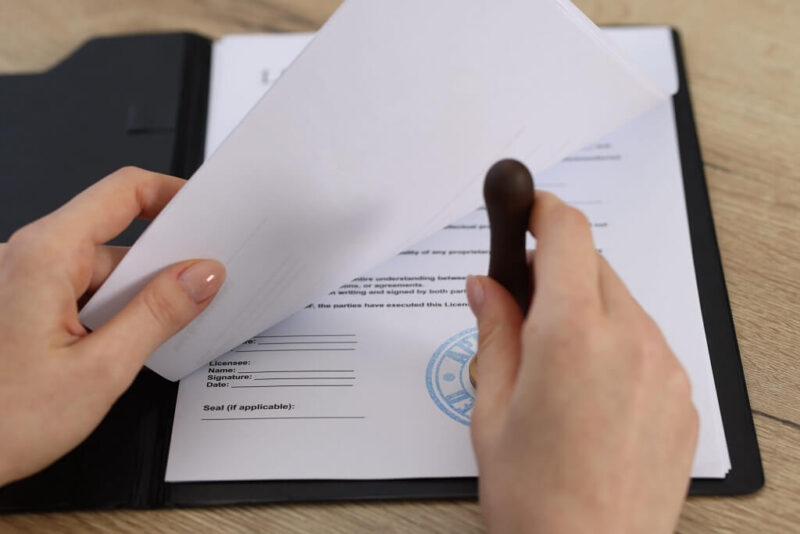
The paperwork is where most delays happen, mainly because two separate processes have to be completed before you even request the DOV.
Apostille. Since the US is party to the Hague Convention, your diploma and transcripts need an apostille attached before a consulate will accept them. This is a US-side step, handled through the Secretary of State’s office in the state where your school is located, not through Italy.
Certified translation. Your diploma, transcripts, and often a description of your coursework need to be translated into Italian. Consulates generally expect this to come from a translator they recognize or one who can certify the translation’s accuracy, and a shaky or inconsistent translation is a common reason applications get sent back for correction.
For academic documents headed to an Italian consulate, working with a certified provider like Elmura’s certified Italian translation services helps make sure terminology, transcripts, and grading scales are rendered the way Italian evaluators expect to see them, rather than translated literally in a way that raises questions.
Documents you’ll typically need to gather:
- Valid passport or ID
- Academic diploma, translated and apostilled
- Full transcripts, translated and apostilled
- A description of your coursework, translated
- Proof of accreditation for your degree-granting institution
- A letter of intent from an employer, if the DOV is for work purposes
Declaration of Value vs. CIMEA Comparability Statement
Not every situation calls for a full DOV. CIMEA, Italy’s national academic recognition center, issues a free Statement of Comparability that some universities accept in its place, particularly for initial enrollment purposes.
| Dichiarazione di Valore | CIMEA Comparability Statement | |
| Issued by | Italian Consulate | CIMEA |
| Cost | Consular fee applies | Free |
| Accepted by | Universities, ministries, licensing boards | Some universities only |
| Best for | Formal equivalency, professional recognition | Initial enrollment, when accepted |
Before relying on a CIMEA statement instead of a DOV, confirm with the specific university’s Segreteria Studenti that they’ll accept it. Some programs still require the consular DOV regardless.
Timeline and What Slows Things Down
Consulates don’t publish fixed processing times, and how long a DOV takes depends heavily on that consulate’s current workload. What you can control is avoiding the delays that come from your own paperwork: an apostille that doesn’t match the document it’s attached to, a translation with terminology inconsistencies, or missing accreditation proof for your school.
Building in a buffer of a few months before an enrollment deadline is a reasonable default, since redoing a rejected translation or tracking down a missing apostille can eat up weeks on its own.
After You Have the DOV

Once issued, the Declaration of Value goes to the Italian authority handling your specific request, whether that’s a university admissions office evaluating your application, a ministry reviewing professional credentials, or another public body.
The DOV itself doesn’t say your degree “equals” a specific Italian degree. It describes your qualification so the receiving institution can make that call, and the outcome can be full recognition, a request for additional coursework, or in some cases non-recognition.
Frequently Asked Questions
Conclusion
For Americans pursuing a full degree in Italy, the Declaration of Value is one of the least glamorous parts of the process and one of the easiest to underestimate. It’s not complicated so much as sequential: apostille first, accurate translation second, then the consulate application itself, submitted to the right jurisdiction with the right supporting documents.
Starting early and getting the translation right the first time is what separates a smooth application from one that bounces back for correction. With those pieces in place, there’s nothing standing between an American degree and full recognition in the Italian system.